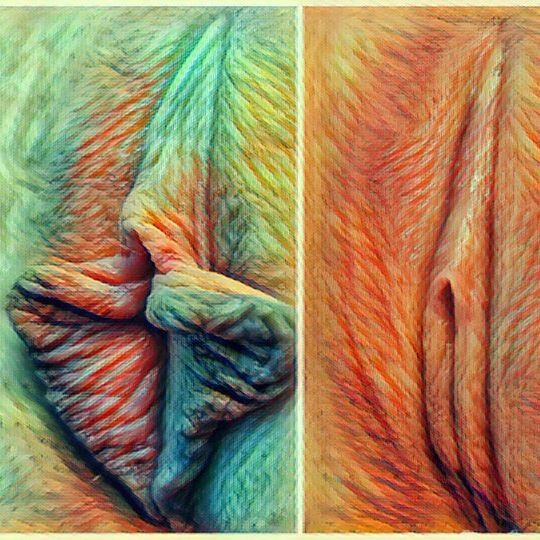
Labioplasty, or surgical correction of the labia minora, is a procedure that is gaining popularity among women who wish to improve the physical comfort and aesthetic appearance of their intimate body parts. One of the most common questions that arises in the context of this procedure is the issue of pain. Does labioplasty hurt? What sensations …

Labioplasty, or surgical correction of the labia minora, is a procedure that is gaining popularity among women who wish to improve the physical comfort and aesthetic appearance of their intimate body parts. One of the most common questions that arises in the context of this procedure is the issue of pain. Does labioplasty hurt? What sensations accompany patients both during and after the procedure? In this article, I will try to answer these questions, dispelling any doubts.
Does labioplasty hurt?
Let me point out straight away that labioplasty does not hurt. Properly performed, the procedure is completely painless. During the procedure, the patient should not experience any pain.
You may now be wondering how this is possible. So where does the pain information you find on various online forums come from? Is the author of this text perhaps embellishing reality a little?
Absolutely not. A properly performed labioplasty, carried out in accordance with appropriate pain relief protocols, should not cause pain. It is crucial that the surgeon follows a few important rules - see below for more on this.
Is recovery after labioplasty painful?
Labioplasty is a surgical procedure which, like any operation, regardless of its type, involves a period of convalescence. When the anaesthesia wears off, it is natural that some discomfort may occur, requiring painkillers.
However, in the case of labioplasty, the good news is that most patients only need painkillers for a maximum of one day after the procedure. Thanks to advanced surgical techniques and appropriate care, the healing process is generally gentle and without major complications.
Does the administration of anaesthesia itself hurt?
The thought of a needle approaching such a sensitive area as the labia can cause anxiety. I understand this perfectly. Fortunately, in labioplasty there is no need to prick the labia minora.
Instead of the standard epidural, I choose a more advanced approach - vulvar nerve anaesthesia. How does this work? Instead of multiple pricks directly into the labia, I make one prick into the lateral part, closer to the greater lips. Imagine that the innervation of the labia resembles a tree - smaller ‘branches’ of nerves diverge from the main labia nerve. Instead of anaesthetising each of these branches separately, which would require multiple pricks, I block the entire ‘trunk’, or labia nerve, with one precise prick. The result? The entire area is effectively anaesthetised.
In addition, such anaesthesia is long-lasting, eliminating the need for additional injections during the procedure.
And does that one sting hurt? I don’t want to promise that you will feel absolutely nothing. You will feel it, but it won’t be pain - more like a brief moment of discomfort. On a scale of 1 to 10, I would rate it a 2, maybe a 3. After that brief moment of discomfort, you won’t feel any pain for the rest of the procedure.
When can labioplasty be painful?
There are two situations in which pain may occur: when swelling occurs or when a laser has been used as a treatment method.
Let’s focus on the swelling first. Imagine it’s been two days since the procedure, everything has been going smoothly, and suddenly you start to feel discomfort. What’s going on? This could be the result of swelling, which sometimes develops as the wound heals. The fluid that collects causes the tissues to swell.
Imagine a skin incision on, for example, your hand - the surgeon puts in a suture, the wound starts to heal, but the tissue around the incision swells, which can lead to tension on the sutures. In extreme cases, the suture may start to ‘cut through’ the swollen tissue - which will lead to pain.
So how do you avoid swelling and the associated pain? The key points here are: in-depth knowledge of surgical techniques, precise placement of sutures and the right equipment used during labioplasty. Thanks to these elements, I can perform the procedure in a minimally invasive manner, which significantly reduces the risk of swelling.
Laser labioplasty and pain after the procedure
Laser labioplasty is quite popular, mainly because ‘laser’ sounds modern and impressive. But. it is worth understanding what the use of a laser actually means. A laser is a concentrated beam of light with very high energy that not only cuts through tissue with precision, but unfortunately also burns it. Your body, your tissues have to heal not only from the incision, but also from the burn.
Imagine accidentally spilling boiling water on your hand. Would it hurt the next day? Of course it will. The same is true if the tissues are burned during the use of a laser - it is this thermal effect that can cause pain in the days following the treatment.
There are far better methods of performing labioplasty than with lasers. These techniques are more precise and much less traumatic to the adjacent tissues, resulting in a much smoother recovery. An example is the radiofrequency knife. I will write more about this in a separate article.
In conclusion: does labioplasty hurt?
Definitely not - labioplasty is a completely painless procedure. From the moment the anaesthetic is administered, through the operation itself, to the recovery period, there is no question of pain. Even the anaesthesia itself is carried out so gently that you won’t feel much discomfort. The first few days after surgery? As after any surgery, you will feel something. But painkillers will be useful for a maximum of 1 day after the procedure.
Of course, unfortunately, there are still specialists who believe that “the surgeon will endure any pain …. as long as it is the patient’s pain.” I, however, firmly believe that in the 21st century, medicine should be comfortable and pain-free.
To confirm this, let me tell you the story of one of my patients. Two days after the procedure, she went to a wedding! Admittedly, she chose not to dance, but she had a great time and spent time with her loved ones. Although I advised her against attending such an event, she only confessed this to me during a check-up a month later. This story only reinforces my belief that labioplasty is a procedure that really doesn’t hurt.
Book your consultation
Your first step can be online: send a short description and a few photos.